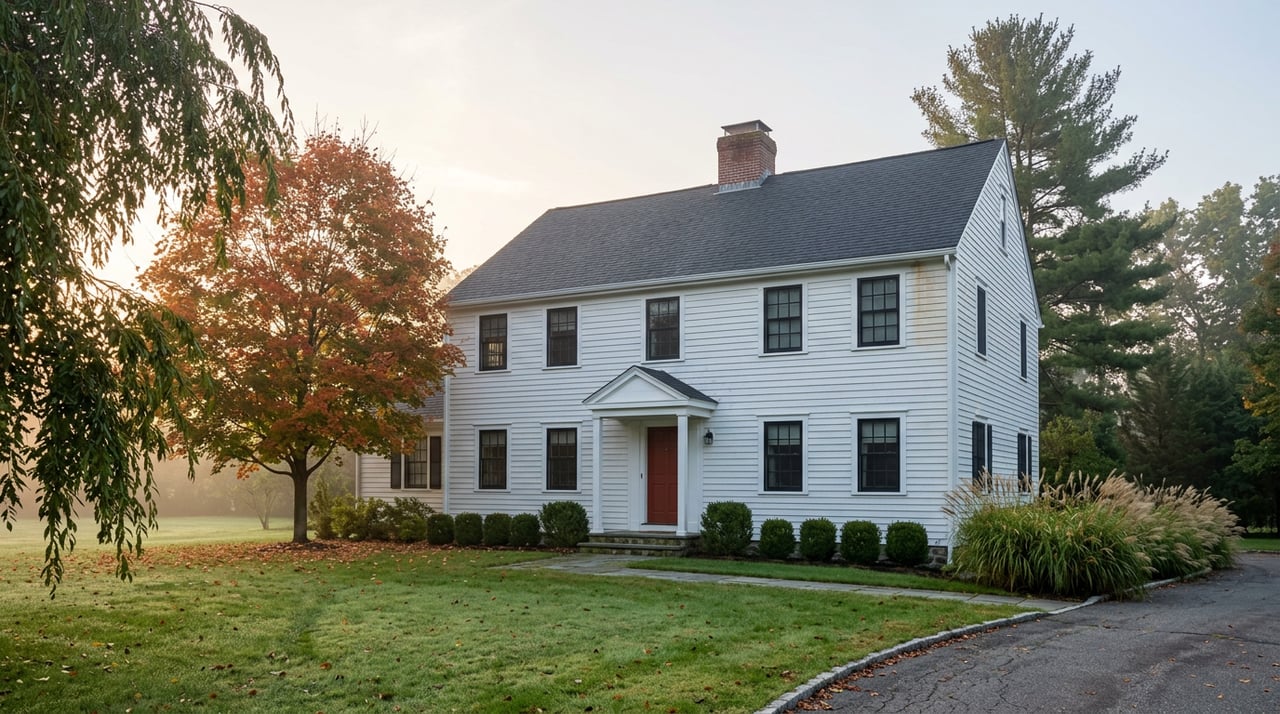
In Hopkinton, a home sale on a private well comes with a step most buyers and sellers in neighboring towns never think about: a town-mandated water test that has to happen before the deal closes, not after. Skip it, forget it, or assume your bank will catch it for you, and you can find yourself scrambling for a lab appointment with a closing date already on the calendar.
This isn't a formality left over from another era. It exists because Hopkinton has spent the last five years dealing with a real water problem, one that has already shown up in private wells near known contamination sites. Understanding why the rule exists changes how a seller should plan for it.
The rule most MetroWest towns don't have
Under Massachusetts General Law Chapter 111, Section 122, local boards of health have jurisdiction over private wells, including the authority to set their own testing rules. Most towns use that authority sparingly. Hopkinton's Board of Health does not. If a home on a private well hasn't had its water tested within the last five years, the seller is required to test it before the property changes hands, and the cost falls on the seller, not the buyer.
That last detail matters more than it looks. Conventional mortgage lenders typically don't independently verify a home's water system before funding a loan, so the well test doesn't show up on a standard lender checklist the way a septic inspection or a home inspection does. In Hopkinton, it's the town, not the bank, that can hold up a closing if the paperwork isn't in order.
The town's own well application also lays out how close a well has to sit to potential contamination sources, with setback rules covering everything from septic systems to property lines to surface water. Those setbacks exist for the same reason the transfer test does: private wells sit closer to risk than most homeowners realize, and Hopkinton's Board of Health treats a home sale as the moment to confirm the water is still safe before someone new moves in.
What the test actually covers
Local labs that meet Hopkinton's Board of Health requirements run what's often called the Hopkinton Well Profile. It's a broader panel than a basic potability test, and it's worth knowing what's on it before you schedule anything.
| Category | What gets tested |
|---|---|
| Bacteria | Coliform |
| Health-based chemicals | Lead, arsenic, cadmium, mercury, volatile organic compounds |
| Nutrients | Ammonia, nitrate, nitrite |
| Aesthetic and general quality | Iron, manganese, hardness, alkalinity, sodium, chlorides, pH, color, odor, turbidity |
Full results typically take 10 to 15 business days to come back from the lab, according to Northeast Water Wells, one of the well testing companies that regularly works in town. That window matters if you're pricing out a fall closing. A test ordered the week before an inspection deadline can easily push into the next contingency period.
Why this rule has real teeth right now
The reason Hopkinton takes this seriously isn't abstract. Since July 2021, several of the town's own public wells have tested above the state's safety limit for a group of chemicals called PFAS. The trouble started at Fruit Street Well #6, which came in at 20.9 nanograms per liter against Massachusetts' 20 ppt standard, just over the line, according to reporting from HopNews. In 2024, the EPA introduced a stricter federal limit of 4 ppt, which means several town wells now fall short of the newer federal benchmark even after clearing the old state one.
The town activated a temporary treatment system at the Fruit Street plant in June 2024, and the Massachusetts Department of Environmental Protection approved that stopgap measure only through July 1, 2027. After that, Hopkinton needs a permanent fix in place. A Board of Health advisory covering infants, pregnant women, nursing mothers, and immunocompromised residents has recommended against drinking or cooking with town water since the exceedance was first identified.
This isn't only a public-water story. HopNews reported that private wells near known hotspots, including ones serving Hopkinton Country Club and the Highland Park area, have also tested above safe PFAS levels. That's the detail that should reframe how a seller thinks about the transfer test. It isn't there to catch old plumbing or hard water. It's there because the town has documented cases of PFAS reaching private wells, and the only way to know if a specific property is affected is to test it.
For more on what PFAS in a private well means for a homeowner, the Massachusetts PFAS in Private Well FAQ from Mass.gov breaks down testing recommendations and treatment options in plain terms.
The water squeeze behind the curtain
Two other pieces of the picture explain why this isn't likely to ease up soon.
Hopkinton is currently in a Level 2 Significant Drought and has been for more than a year, with an outdoor water use ban still in effect according to the town's water and sewer department. The town's public system serves about two-thirds of its roughly 18,800 residents through five active wells, three others having been taken offline for water quality problems, plus water purchased from neighboring Ashland. Growth from developments like Legacy Farms added real demand to a system that was already stretched.
The long-term fix is a planned connection to the MWRA and the Quabbin Reservoir, routed through Southborough's existing system. As of 2026, the town is submitting its Alternatives Analysis to the state Water Resources Commission, with final design review targeted for 2027 and construction not expected to start before 2028 or 2029. That's a multi-year runway, and residents are already paying for the transition. Water rates for fiscal year 2027, effective July 1, 2026, run $75.01 as a minimum for the first 1,000 cubic feet, up from $65.23 the year before, per the town's posted rate schedule.
None of this changes what a private well owner needs to do before selling. It does explain why the town isn't likely to relax its testing requirement anytime soon. Hopkinton is mid-transition on water, and the transfer test is one of the few tools the Board of Health has to keep tabs on private supplies while the bigger infrastructure question plays out over the next several years.
What this means if you're listing this fall or winter
A few practical steps make the difference between a smooth closing and a delayed one:
- Confirm your last well test date before you list. If it's been five years or close to it, schedule the test now rather than waiting for an inspection contingency to force the issue.
- Use a lab or well company familiar with Hopkinton's specific requirements, since the town's profile includes parameters beyond a basic potability screen.
- Build the 10 to 15 business day lab turnaround into your listing timeline, especially if you're targeting a closing before the holidays.
- If a result comes back elevated, particularly for PFAS, know that treatment options exist, from point-of-entry systems to filtration certified under NSF/ANSI standards, but sourcing and installing one takes additional time.
- If your home is on private well and located near Hopkinton Country Club, the Highland Park area, or otherwise close to a documented PFAS site, budget extra time for retesting even if your last test technically falls within the five-year window, since a buyer's agent or attorney may ask for a fresh one anyway.
A few questions worth asking before you list
Does this apply if my home is on town water instead of a private well? No. The transfer testing requirement is specific to private wells. Homes connected to Hopkinton's public water system aren't subject to this Board of Health rule, though public water customers are the ones absorbing the rate increases tied to the town's infrastructure investments.
What if I already tested within the last five years? You may still be asked to retest. Buyers, their agents, or their attorneys sometimes request a fresh test regardless of the town's minimum window, especially given the documented PFAS history in parts of town.
What happens if the test finds a problem? It doesn't mean the sale falls apart. Most issues, from bacteria to iron to PFAS, have established treatment paths. The key is finding out early enough to install a fix or negotiate around it, rather than discovering it during an already-tight closing window.
If you're planning to sell a Hopkinton home on a private well, the timeline matters as much as the number on the report. Darlene & Company works with Hopkinton sellers to line up testing, timelines, and next steps well before a closing date is at risk. Get your free home valuation and move plan to start the conversation early.