If you are house hunting in Sudbury, one thing becomes clear fast: home style is not just about looks. In a market where most homes are single-family, owner-occupied, and often quite large, the way a house lives day to day can matter just as much as the address. This guide will help you understand the home styles you are most likely to see in Sudbury, how they typically function, and what to think about before you buy. Let’s dive in.
Why home style matters in Sudbury
Sudbury is a town where the housing stock has a strong pattern. According to the town’s 2025 Housing Production Plan, 94% of the 6,323 housing units are single-family homes, and Census QuickFacts reports an owner-occupied rate of 89.9% with a median owner-occupied home value of $988,900. When homeownership costs are high, layout, square footage, and upkeep matter in a very practical way.
That is especially true in a town where many households need space to function well over time. The Regional Housing Services Office says 50% of Sudbury households have children under 18, and QuickFacts reports 3.04 persons per household. A 2019 housing profile also found that only 12% of homes had two bedrooms or fewer, while most had four bedrooms or more.
In other words, Sudbury buyers are often choosing not just between homes, but between different ways of living. Some houses feel formal and room-by-room. Others feel open, flexible, and built for modern daily flow. Understanding those differences can help you make a smarter move.
Colonial homes in Sudbury
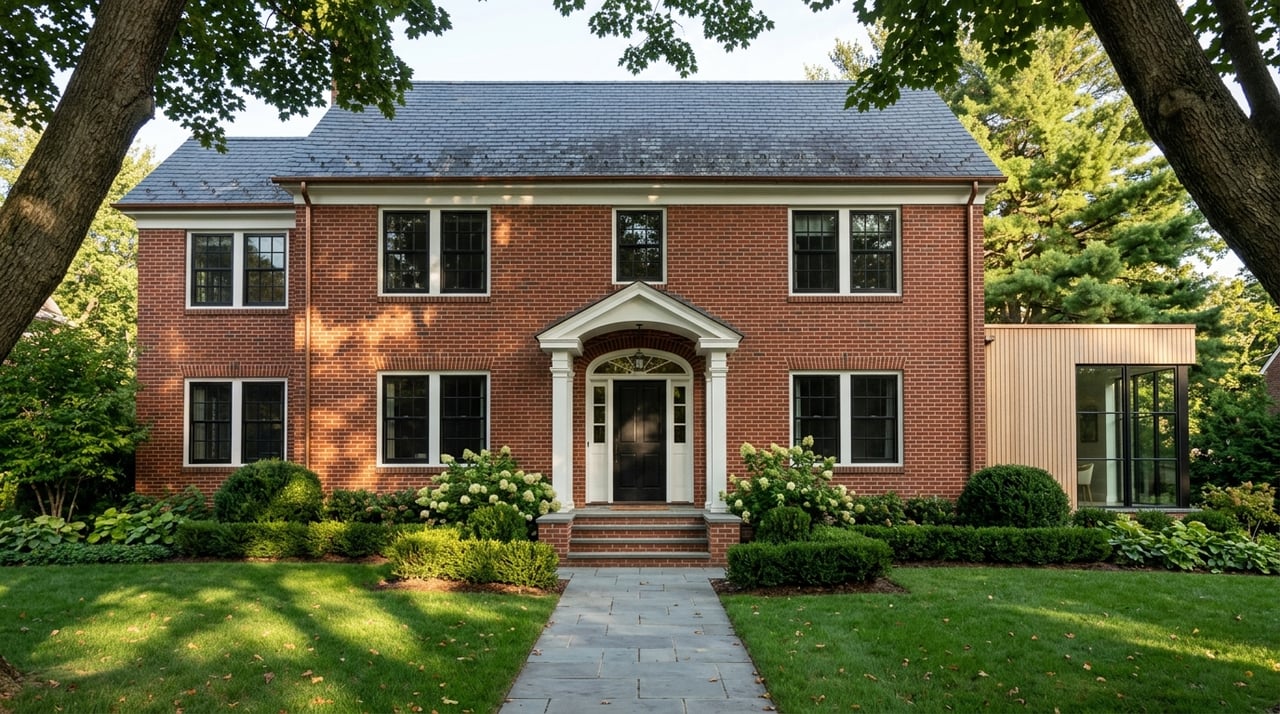
Colonial and Colonial Revival homes are some of the most recognizable styles in Sudbury. These homes often have a symmetrical front, a center entry, and a balanced look from the street. Historic New England notes that many Colonial Revival houses are five bays wide with a center entry, and their interiors are often more open and less symmetrical than earlier colonial-era homes.
In daily life, Colonials tend to feel orderly and traditional. You may see more clearly defined rooms instead of one large open main level. For some buyers, that creates a sense of structure and separation that works well for work, entertaining, or quieter household routines.
Sudbury’s oldest local examples are tied to its historic districts. The town identifies Town Center, Wayside Inn, George Pitts Tavern, and King Philip as historic districts, with some of the oldest homes concentrated there. The Goulding House, identified by the town as Sudbury’s oldest existing home, reflects how deep these roots go.
How Colonials usually live
Colonials often appeal to buyers who like a classic layout and a traditional exterior. In practice, they can offer:
- More defined living and dining spaces
- A formal feel from room to room
- Strong curb appeal with timeless New England character
- A layout that may feel less open than newer homes
If you are drawn to classic architecture, a Colonial may feel like the right fit. If you want wide-open sight lines and casual flow, you may want to compare it closely with newer or more contemporary options.
Cape homes in Sudbury
Cape-style homes bring a different kind of appeal. Historic New England describes Cape Cod houses as modest one-and-one-half-story homes that are two rooms deep, with steep gable roofs, large central chimneys, and minimal roof overhangs. Older capes date back centuries, and the style returned in force after World War II.
For many buyers, a Cape feels more compact and efficient than a larger Colonial. The shape is straightforward, and the footprint often creates less wasted circulation space. That can make a Cape feel practical, manageable, and comfortable for buyers who do not want excess square footage.
This style fits naturally with Sudbury’s postwar housing wave. A 2019 town housing profile said more than half of Sudbury homes were built between 1950 and 1980, which helps explain why capes remain part of the local housing mix.
How Capes usually live
Capes often work well for buyers who want a home that feels cozy and efficient. They typically offer:
- A more compact footprint
- Straightforward, functional room placement
- Classic New England charm
- Less overall space than many larger Sudbury homes
That said, older capes may also need more updating. The town’s 2025 housing plan notes that older units may have lower energy efficiency, code-compliance issues, and lead paint concerns. If you love the look of an older Cape, it is worth weighing charm against future project costs.
Contemporary homes in Sudbury
Contemporary homes stand apart from the more traditional New England styles. The National Park Service describes contemporary houses as modernist in outlook, often using open floor plans, patios and terraces, sliding glass doors, floor-to-ceiling windows, and indoor-outdoor living concepts.
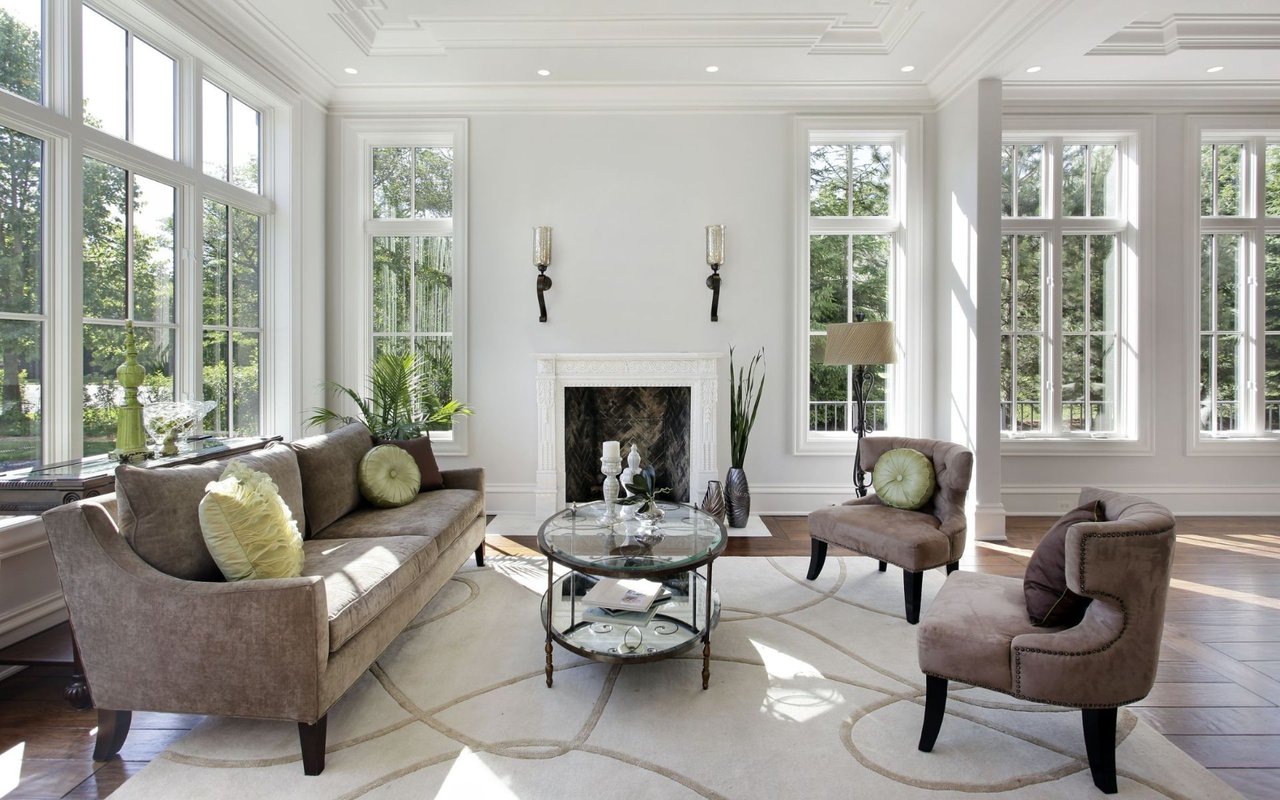
In real life, that often translates to a more relaxed and flexible living pattern. These homes may feel brighter, more open, and less formal than Colonials or Capes. If you want easier flow between the kitchen, family room, and outdoor space, contemporary design often supports that.
Contemporary homes also fit well with Sudbury’s larger-lot pattern and newer custom-build segment. In a town where a meaningful share of homes are large, these layouts can make square footage feel more usable for everyday living.
How Contemporary homes usually live
Contemporary homes often appeal to buyers who prioritize flexibility and light. They commonly offer:
- Open-concept living areas
- Easier connection to patios, decks, or yards
- Large windows and a brighter feel
- Less formal separation between rooms
If your daily routine centers on gathering spaces and casual movement through the home, this style may feel especially comfortable.
Newer custom builds in Sudbury
Newer custom builds are an important part of Sudbury’s market story. The town’s 2025 Housing Production Plan says median single-family prices rose by more than 50% from 2019 to 2022, crossed $1 million in 2021, and stayed well above that level in 2023. The same report says land values and lot constraints push the market toward larger homes.
That is one reason many newer homes in Sudbury are substantial in size. In 2023, only 15% of single-family houses sold were under 2,000 square feet, while 29% were larger than 4,000 square feet. Buyers who are searching in Sudbury should expect to see many homes designed for larger-scale living.
Architecturally, newer custom builds often blend old and new. Historic New England notes that Colonial Revival motifs remain popular in new construction. As a result, many new homes look traditional from the street but live more like modern homes once you step inside.
How newer custom builds usually live
These homes often combine classic exterior styling with updated interiors. You may find:
- More open main levels
- Larger kitchens and family spaces
- Newer systems and materials
- Layouts that support current day-to-day living patterns
For buyers who want a traditional New England look without giving up modern flow, this category often checks both boxes.
Where different styles show up
In Sudbury, style is not evenly spread across town. The Historic Districts Commission identifies four historic districts: Town Center, Wayside Inn, King Philip, and George Pitts Tavern. It also notes that Maple Avenue shows the town’s housing evolution, with many homes there built between 1882 and 1920.
Pre-1940 structures make up the smallest share of Sudbury’s housing stock, according to the 2025 housing plan. That means truly old homes are part of Sudbury’s story, but they are not the dominant product in the market.
Most of the town’s housing came later. The 2019 housing profile said more than half of homes were built between 1950 and 1980, which helps explain why many buyers end up choosing between postwar traditional homes, updated older houses, and newer custom construction.
What buyers should consider beyond style
In Sudbury, the right style is also the one that fits your tolerance for maintenance, updates, and long-term cost. An older Colonial or Cape may offer charm and established character, but it can also come with efficiency issues, lead paint concerns, or code-related improvements noted by the town’s housing plan.
A newer custom home may offer easier day-to-day upkeep, but it may also come with more square footage than you need. Since median monthly owner costs are reported at more than $4,000 with a mortgage, it is worth asking how much home truly fits your budget and lifestyle.
As you compare properties, it helps to think through a few practical questions:
- Do you want formal rooms or open space?
- Do you prefer classic character or newer finishes?
- Are you comfortable taking on renovation work?
- How much square footage will you actually use every day?
- Would a compact layout feel efficient or limiting?
Those answers often point you toward the right style faster than curb appeal alone.
Matching style to your move
If you are buying and selling at the same time, these choices become even more important. The style of home you buy affects not only how you will live next, but also how you plan timing, budget, and any future updates. A compact Cape, a classic Colonial, a light-filled contemporary, and a newer custom build can all work in Sudbury, but they support different routines.
That is why it helps to look beyond listing photos. The best move usually comes from understanding how a house will function for your everyday life, your future plans, and your comfort with upkeep. In a market like Sudbury, that clarity can make your search much more focused.
If you are weighing home styles in Sudbury or planning a coordinated move in MetroWest, Darlene Umina can help you compare options, prepare your current home for the market, and build a move plan that fits how you want to live.
FAQs
What home styles are most common in Sudbury, MA?
- Sudbury is dominated by single-family homes, and buyers commonly notice Colonials, Colonial Revival homes, Capes, contemporary homes, and newer custom builds.
How do Colonial homes usually live in Sudbury?
- Colonial homes in Sudbury often feel more traditional and room-based, with defined spaces and a formal, orderly layout.
Are Cape homes in Sudbury usually smaller?
- Yes. Cape-style homes are typically more compact and efficient-feeling than many larger Sudbury homes, although individual properties vary.
Why are so many Sudbury homes large?
- The town’s housing profile points to a heavily single-family, owner-occupied market, family-sized households, land values, and lot constraints that tend to support larger homes.
Do older Sudbury homes need more updates?
- They can. The town’s 2025 housing plan says older homes may have lower energy efficiency, code-compliance issues, and lead paint concerns.
Why do some newer Sudbury homes still look traditional?
- Colonial Revival motifs remain popular in new construction, so many newer homes are designed with traditional exteriors even when the interiors feel more modern.